
Organization Overview
A significant portion of the organization’s cryptography, configurations, and certificates are not quantum resistant, placing critical systems, sensitive data, and communications at high risk and necessitating immediate remediation. A summary combining the scan results from code, certificates, and configurations. Each section provides a brief overview and links to detailed views for the respective scan types.
Viewing the Organization Report
To view organization reports:
-
Go to .
The Quantum Trust Hub : Certificate Scan page is displayed.
-
From the menu bar, select Organization
Overview.
The Quantum Trust Hub : Organization Overview page is displayed.
The widgets displayed have been explained here.
Understanding the Organization OverviewDashboard
Quantum Readiness Score
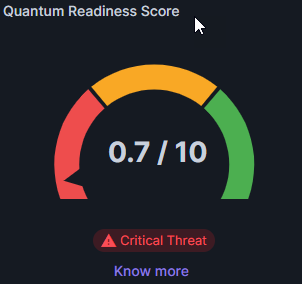
PQC Score Breakdown
Score is calculated based on the Quantum readiness of the crypto categories identified across scans.
- Quantum Resistant Crypto Categories Identified = 1 Point
- Quantum Vulnerable Crypto Categories Identified = 0 Point
Total PQC Score = Total Quantum Resistant Crypto Categories identified / Total Crypto Categories Identified
(Higher scores indicate stronger overall organizational resilience against future quantum-based attacks.)

The threat level is displayed below the Gauge chart.
To read more on what the displayed threat level means and the recommended next steps, click Know more from the widget.
Cryptographic Asset Discovery Summary
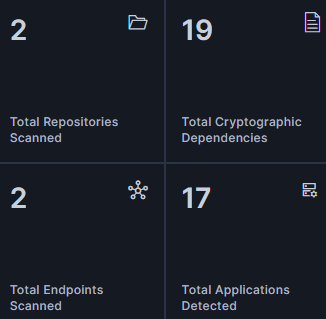
Total Repositories Scanned
Total number of repositories analyzed during the scan process
Each repository is evaluated to identify cryptographic implementations, libraries, and algorithms used within the source code. The results contribute to determining the overall quantum readiness posture across the scanned repositories.
Total Cryptographic Dependencies
Represents the total count of cryptographic dependencies discovered during source code analysis. These include third-party libraries and packages that implement or utilize cryptographic functions such as. encryption, signing, or key exchange.
Total Endpoints Scanned
Indicates the total number of endpoints analyzed for cryptographic components and quantum readiness posture.
Total Applications Detected
Represents the total number of applications detected during the scan process. Each application is analyzed to identify embedded cryptographic components, libraries, and configurations that contribute to its overall quantum readiness posture.
These counts help you understand the scope of your cryptographic footprint and ensure complete coverage during scans.
Crypto Asset Summary
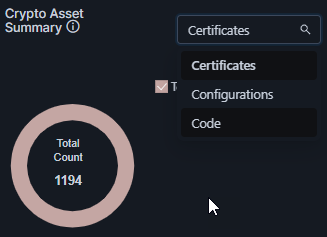
Use the dropdown menu in the top-right corner of the widget to update the visualization for a specific crypto asset, from the following options:
| Option | Description |
|---|---|
| Certificates | Displays cryptographic assets related to digital certificates, including types and algorithms. X.509 certificates and TLS/SSL implementations. |
| Configurations | Shows cryptographic elements within system or application configurations, like encryption settings and protocols. |
| Code | Represents cryptographic components found directly in the source code, such as implemented algorithms or cryptographic libraries. |
High Risk Crypto Assets
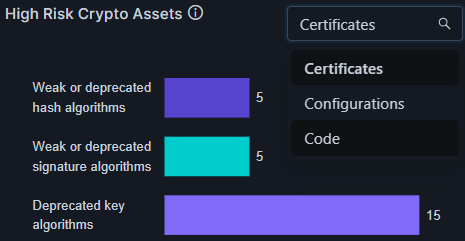
This widget visualizes the proportion of high-risk assets across different categories. It helps security teams focus on the most vulnerable areas of their cryptographic infrastructure.
| Option | Description |
|---|---|
| Certificates | Shows certificates using weak cryptographic standards, such as short key lengths or deprecated hashing/signature algorithms. |
| Configurations | Displays insecure cryptographic settings in system or application configurations, such as weak key exchange parameters or non-quantum resistant algorithms. |
| Code | Identifies hardcoded or referenced cryptographic algorithms in source code that are considered insecure or obsolete. |
Quantum Readiness by Protocols
| Option | Description |
|---|---|
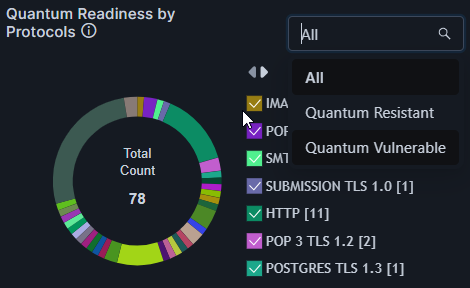
| All | Displays the full distribution of cryptographic protocols detected across the environment, both quantum resistant and quantum vulnerable. |
| Quantum Resistant | Filters and displays only those protocols that are designed to resist quantum attacks (e.g., using post-quantum algorithms or strong modern standards). |
| Quantum Vulnerable | Filters and displays protocols that rely on cryptographic mechanisms known to be breakable by quantum computers (e.g., RSA, ECC < P-256, DH ≤ 2048-bit). |
Applications Usage by Severity
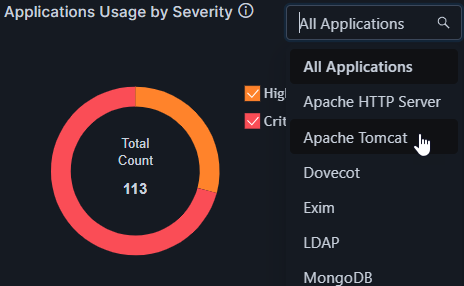
The above widget shows the number of applications currently in use, as detected by the scan. The interactive legend lists the severity status and the count of applications per severity status.
- Critical: High-impact vulnerabilities that pose an immediate threat to data security and require urgent remediation.
- High: Serious weaknesses that could be exploited but may require more effort or specific conditions.
- Medium: Moderate risks that should be addressed but are not immediately exploitable.
- Low: Minor issues or outdated practices that may not pose immediate risk but still warrant review.
Use the dropdown menu in the top-right corner of the widget to update the visualization for a specific application.
Crypto Library Usage by Severity
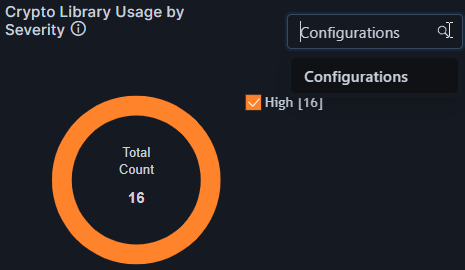
The above widget shows the total number of libraries in use. The interactive legend lists the severity levels and the count of applications per severity status.
- Critical: High-impact vulnerabilities that pose an immediate threat to data security and require urgent remediation.
- High: Serious weaknesses that could be exploited but may require more effort or specific conditions.
- Medium: Moderate risks that should be addressed but are not immediately exploitable.
- Low: Minor issues or outdated practices that may not pose immediate risk but still warrant review.
Use the dropdown menu in the top-right corner of the widget to update the visualization for a specific library type.
Algorithm Usage
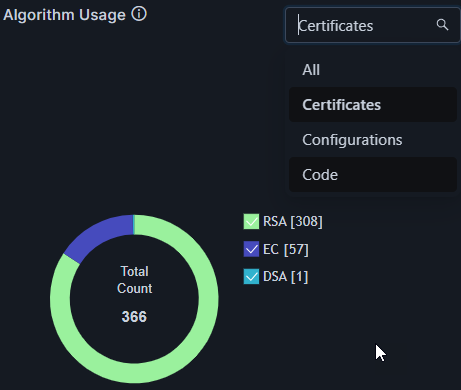
This donut chart visualization helps to identify the prevalence of specific algorithms such as RSA, AES, ECC, SHA variants, etc. and evaluate their suitability from a security and quantum-readiness perspective.
| Option | Description |
|---|---|
| All | Displays the overall usage distribution of all cryptographic algorithms across all asset types |
| Certificates | Filters and shows only the algorithms used in digital certificates (e.g., signature and key exchange algorithms) |
| Configurations | Displays algorithms defined in application or system configurations (e.g., TLS settings, cipher suites) |
| Code | Shows algorithms found in source code, including hardcoded cryptographic logic or library references |
Certificate Readiness & Risk
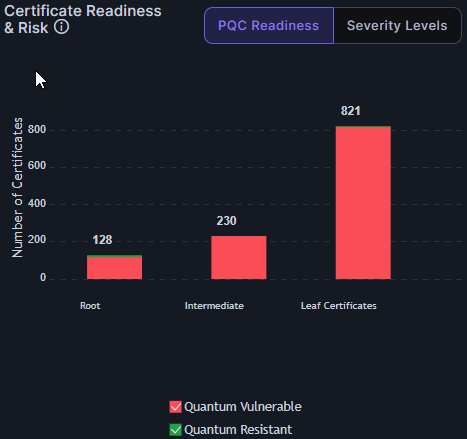
| Option | Description |
|---|---|
| PQC Readiness | Displays certificates based on their readiness for post-quantum cryptography. Categories may include quantum resistant, partially ready, or quantum vulnerable certificates, depending on algorithm strength and key size. |
| Severity Levels | Shows certificates categorized by the severity of their cryptographic weaknesses critical, high, medium, or low based on outdated algorithms, key lengths, or insecure hashing/signature schemes. |
Use the tabs in the top-right corner of the chart to switch between the views.
